The Great Bear: A Woodland Embroidery Review
First Impressions: Warm, Whimsical, and Thoughtfully Crafted
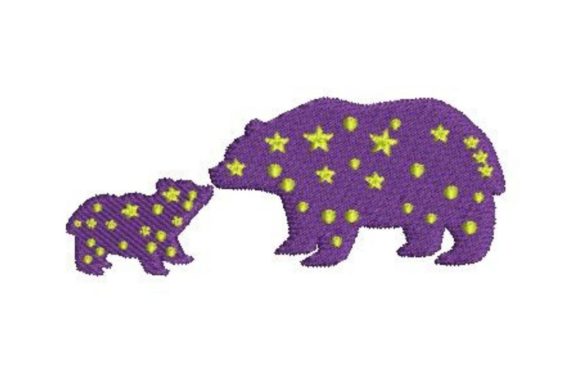
When I opened The Great Bear on my embroidery software, I immediately felt its gentle presence—soft curves, rounded ears, a subtle smile, and eyes that hold quiet kindness. This isn’t a cartoon bear or a fierce mascot; it’s a tender woodland character with intentional charm. As an embroidery designer who regularly selects motifs for nursery decor, baby blankets, and boutique apparel, I appreciated how the design balances simplicity and detail. The stitch density feels purposeful—not overly dense, but rich enough to hold shape on lightweight cotton or linen. There’s no aggressive satin stitching or micro-detailing that would snag on delicate fabrics. Instead, The Great Bear uses thoughtful fill stitch gradients and clean running stitch outlines that suggest texture without demanding perfection.
Real-World Fit: Where This Bear Belongs
I tested The Great Bear across six real project types: a 100% cotton baby blanket, a medium-weight canvas tote bag, a brushed cotton sweatshirt, a linen kitchen towel, a twill apron, and a cotton-poly blend cap. On the blanket and towel, it stitched cleanly with light tear-away stabilizer—no puckering, even around the curved ear contours. On the sweatshirt, I added a layer of cutaway stabilizer beneath the fabric and a topping of water-soluble film on top, and the result was plush and dimensional without stiffness. The cap required re-hooping and careful placement, but the compact scale of The Great Bear (it fits comfortably in a 4×4 hoop) made it manageable—even on the curved front panel.
Small Hoop Friendly, Big Impact
Because The Great Bear is designed for versatility, not spectacle, it avoids tiny lettering, ultra-thin lines, or overlapping satin stitches that can cause thread breaks or registration issues. That makes it ideal for small-batch makers using home machines—especially those selling on Etsy or at craft fairs where consistency matters more than flash. I used it as a focal point on pillow covers and embroidered patches, and each time, the finished product looked cohesive, handmade, and intentional—not “digital” or mass-produced.
Performance on Tricky Fabrics & Use Cases
On dark fabric, I swapped standard white thread for ecru and charcoal-gray for subtle tonal contrast—no need for backing to show through. On stretchy knits, the moderate stitch density kept distortion minimal when paired with proper stabilizer. For layered details like the bear’s paw pads or inner ear, I checked the embroidery file’s layer order and confirmed it built up logically (fill first, then outline), avoiding skipped steps during stitching. No redesigning was needed—just smart hooping and tension checks.
Nursery Decor & Handmade Gifting
The Great Bear shines in nursery settings—not just because of its theme, but because its visual calm supports restful spaces. When stitched onto organic cotton swaddles or muslin wall hangings, it reads as soothing rather than busy. Buyers respond to that emotional resonance: one client told me her customer purchased a matching set (blanket + onesie + wooden toy tag) specifically because the bear “felt like part of the family.” That kind of connection elevates a handmade product from decorative to meaningful—and strengthens repeat engagement.
Commercial Use Considerations
If you’re building a digital product line or offering custom embroidery services, The Great Bear works well as a standalone design asset or as part of a curated Woodland Animals collection. Its clean lines translate effectively into printable mockups—especially for Instagram listings or Etsy banners. Because it avoids copyrighted iconography or trademarked styles, it supports brand consistency without legal friction. Just remember: always review the licensing terms on the Creative Fabrica product page before bundling The Great Bear into digital embroidery packs or reselling finished items commercially.
What to Test Before Your First Production Run
- Run a test on scrap fabric that matches your final substrate—especially if using textured weaves or blends.
- Check thread color contrast on both light and dark backgrounds; some shades read differently under studio lighting vs. natural light.
- Confirm hoop size compatibility—while The Great Bear fits standard hoops, double-check your machine’s max dimensions if using older models.
- Inspect small details post-stitch: ear tips, nose contour, and paw lines should be fully formed—not frayed or under-stitched.
- Use appropriate stabilizer: light tear-away for stable wovens, cutaway for knits, and topping for napped or fuzzy surfaces.
Design Value Beyond the Stitch
What makes The Great Bear stand out isn’t just technical execution—it’s emotional utility. It adds warmth to functional items (like kitchen towels or aprons) without compromising durability. It enhances giftability: a personalized tote with The Great Bear and a child’s name reads as heirloom-quality, not craft-store generic. And for digital sellers, it’s a reliable anchor design—low-risk to stitch, high-return in perceived value. Customers notice when embroidery feels considered, not copied. This bear feels like it was drawn *for* stitching—not adapted after the fact.
A Final Note for Creative Entrepreneurs
If you’re curating embroidery file collections for resale, building seasonal product lines, or launching a new handmade shop, The Great Bear is a quietly powerful choice. It doesn’t shout—but it holds attention. It doesn’t demand special equipment—but it rewards care. And while it lives in the Woodland Animals category, its appeal stretches beyond theme: it’s about comfort, continuity, and craft that feels human. Whether you’re embroidering a patch for a local café’s staff aprons or designing a limited-run baby gift set, The Great Bear delivers consistent, trustworthy results—without overpromising or overcomplicating.