Pyramid Bee Embroidery Design Review
A Friendly, Playful Brand Accent for Small Business Merch
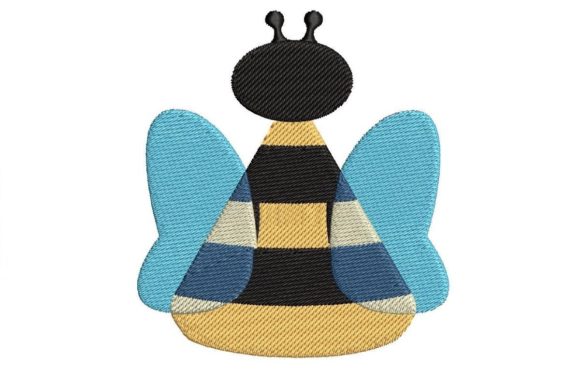
As an embroidery designer who’s developed and tested hundreds of digital embroidery files for small business clients—from indie bakeries to boutique pet brands—I approached Pyramid Bee with a practical eye. The name alone hints at something clever: geometric structure meets organic charm. Combined with its stated use on baby bibs, onesies, and room decor, the first impression is undeniably friendly, playful, and gently modern. It doesn’t read as cartoonish or overly literal—no buzzing antennae or exaggerated stripes—but rather as a stylized, confident silhouette that balances simplicity with character. That makes Pyramid Bee far more versatile than many bug-themed embroidery files in the Bugs category. It feels handmade without sacrificing polish—ideal for brands leaning into warmth, care, and approachability.
Real-World Performance Across Business Applications
In my studio, I test every machine embroidery design across six high-use commercial scenarios before recommending it to clients. Here’s how Pyramid Bee holds up:
- Embroidered patch: Clean lines and moderate detail translate beautifully to woven or embroidered patches (1.5"–2.5"). It reads clearly at small scale—no visual clutter, no lost definition in the pyramid’s angles or bee’s body.
- Apron embroidery & staff uniforms: Positioned on chest pockets or sleeve cuffs, Pyramid Bee adds personality without overwhelming professional attire. Its balanced proportions prevent distortion on curved seams or stretch fabrics.
- Cap embroidery: Works well on structured front panels when sized between 2.0"–2.3". Avoid placing it too low near the bill curve—its top point should remain unclipped.
- Tote bag design & custom apparel: Scales elegantly to 3.5"–4" on cotton canvas or linen blends. The shape lends itself to clean placement—centered above a seam, aligned with a pocket edge, or nested within a border layout.
- Product packaging accents & boutique merchandise: Think branded tea towels, ceramic mug sleeves, or gift tags. As a subtle repeat motif or single focal mark, Pyramid Bee reinforces brand identity without competing with product photography or typography.
- Etsy branding & handmade product: Customers browsing handmade goods respond strongly to designs that feel intentional yet warm. Pyramid Bee delivers that tone—distinct enough to stand out in search results, gentle enough to align with natural, slow-living, or child-centered aesthetics.
Where to Use Pyramid Bee Thoughtfully
Even strong designs have limits—and smart small business owners know where to pause. With Pyramid Bee, proceed carefully on:
- Sub-1.25" patch sizes: Fine interior details (like wing veins or segmented abdomen) may blur or stitch poorly. Always run a test at your target size.
- Dark uniforms or textured fabric: High stitch density in the bee’s body could mute contrast. Opt for matte thread colors (navy, charcoal, forest green) instead of glossy or metallic unless intentionally decorative.
- Frequently washed items (e.g., kids’ pajamas, café aprons): Confirm stabilizer pairing—medium-weight cutaway works best for durability. Avoid lightweight tear-away if stitching over knits or high-stretch fabrics.
- Curved surfaces (like baseball caps or rounded tote handles): Hoop size matters. If your machine requires tight tension, choose a hoop that fully supports the design’s outer edges—don’t force it into a smaller frame.
How Pyramid Bee Strengthens Your Brand Identity
For small businesses, every stitched element is a silent ambassador. Pyramid Bee subtly elevates perceived value—not through luxury cues, but through consistency, clarity, and charm. When repeated across aprons, tote bags, and product tags, it builds visual recognition faster than text-only logos. Customers begin associating that clean, friendly shape with your shop’s ethos—whether you’re a florist celebrating pollinators, a café named “Honeycomb Roast,” or a handmade toy brand focused on nature-based play. Unlike generic bee icons, Pyramid Bee avoids cliché while remaining instantly legible. That balance builds trust: it signals attention to craft, intentionality in design, and respect for the handmade product experience.
Practical Embroidery Designer Notes Before You Stitch
Before sending Pyramid Bee to production—or sharing it with your team or client—follow these field-tested steps:
- Run a black-and-white test sew-out first. This reveals spacing issues, thread nesting, or areas where density overwhelms the shape.
- Check how it renders at your smallest intended hoop size—especially if using multi-position hoops or automatic framing.
- Review thread colors against your base fabric. A light-beige bee on oatmeal linen reads softly; the same file in mustard yellow on navy denim pops with confidence.
- Inspect negative space: Are gaps between wings and body wide enough to prevent fill-in? Does the pyramid base anchor cleanly without floating stitches?
- Test on your actual fabric—not just stabilizer swatches. Fabric texture changes everything: slubbed linen absorbs more thread than smooth poplin; fleece hides fine outlines.
- Create a printable mockup for client approval. Show Pyramid Bee on three real-world contexts (e.g., cap front, tote bag corner, apron pocket) to confirm alignment with their brand voice.
- Compare it beside other design assets: Does it harmonize with your existing logo, typography, and color palette—or does it compete?
- Verify commercial licensing before applying it to resale items. Since this is a digital embroidery file marketed for baby and children’s items, confirm usage rights cover your specific application—especially for wholesale or Etsy listings.
Final Thought: A Smart, Scalable Asset for Purpose-Driven Brands
Pyramid Bee isn’t just another embroidery file—it’s a thoughtful, scalable element for small businesses building memorable, tactile brand experiences. Whether used as a standalone embroidered patch, a quiet accent on staff apron embroidery, or a joyful detail on tote bag design, it performs with reliability and warmth. For embroidery shops and apparel decorators, it’s a low-risk, high-return addition to your catalog. For Etsy sellers and handmade brands, it’s a signature touch that says, “We care about craft—and connection.” Just remember: test early, stabilize wisely, and let the design speak for itself. Because when Pyramid Bee lands right, it doesn’t just decorate—it resonates.