Anatomical Heart Line Art
First Impression: Smart, Subtle, and Unexpectedly Romantic
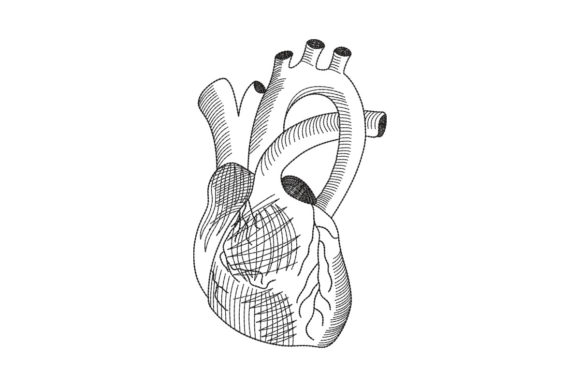
As an embroidery designer who’s prepped over 200 craft fair booths, I’ll say it plainly: Anatomical Heart Line Art doesn’t scream “Valentine’s Day” — and that’s its biggest strength. It reads as modern, intelligent, and quietly confident — not cutesy or cliché. Customers pause longer when they see it because it feels like a discovery: a delicate blackwork machine embroidery design that nods to medical illustration, not greeting-card tropes. It lands somewhere between minimalist and scholarly — elegant enough for a boutique apron, intriguing enough for a science teacher’s tote bag, and refined enough to elevate a small shop product without shouting.
Where It Shines on Craft Fair Products
This design thrives where intention meets utility. On a heavyweight cotton tote bag? Perfect — the clean line art holds clarity at 4–5 inches wide, and the anatomical detail invites closer inspection (a key booth moment). On a linen tea towel? Exceptional — the vessels and chambers read beautifully against subtle fabric texture, especially when stitched in matte black thread. As an embroidered patch? Highly wearable and conversation-starting — ideal for jackets, backpacks, or denim aprons aimed at healthcare workers, educators, or design-savvy teens.
It’s less ideal for curved surfaces like baseball caps unless scaled to 3 inches max and placed front-and-center — tiny vessel lines can blur on dome-shaped fabric. And while it works on pillow covers, avoid dense quilting or high-pile fabrics; stitch density matters here. On small pouches or market bags, keep it centered and uncluttered — this isn’t a design that crowds well. For printable mockups and Etsy listings, it photographs crisply even in natural light, making digital embroidery file previews instantly trustworthy.
What Makes It Sell — and What Makes It Stumble
Selling strengths: It stands out in a sea of florals and script hearts. Buyers remember it. It appeals across demographics — from med students to vintage-loving designers — and feels premium without requiring metallic thread or complex fills. As a craft fair product, it pairs effortlessly with neutral palettes (cream, charcoal, oat, deep navy), reinforcing handmade quality and brand consistency.
Production pitfalls to watch: The fine vessels and chamber outlines are unforgiving on textured towels or terry cloth — test first. Dark fabric demands high-contrast thread (e.g., white or cream) to preserve legibility. Tiny details vanish below 2.5 inches, so skip using Anatomical Heart Line Art as a corner accent on tea towels or hem embroidery unless you’ve verified clarity on your specific fabric. Avoid thick stabilizer stacks — this is line art, not satin-stitch florals; over-stabilizing kills its sketch-like lightness.
Real-World Booth & Online Performance
In person, Anatomical Heart Line Art draws attention through contrast: quiet design, bold concept. Place it beside a hand-dyed apron and a stack of matching tea towels — suddenly your booth reads cohesive, intentional, and expertly edited. Customers touch the stitching, tilt their heads, and often ask, “Is that *real* anatomy?” That engagement is gold. Online, it converts well for Etsy sellers targeting niche audiences: science lovers, anatomy enthusiasts, alternative gift shoppers, and educators building classroom-themed merchandise.
For repeat batch production? Yes — but only if you standardize hoop size and stabilizer type. Unlike dense fill designs, this one relies on precision in spacing and stitch tension. A single inconsistent run can make vessels look broken or uneven. Confirm your embroidery file includes clean jump stitches and minimal trims — messy digitizing undermines its clean aesthetic.
Designer Notes You Can’t Skip
- Always test on scrap fabric — especially with your exact tea towel weave or apron weight. Line art reveals every thread snag or puckering.
- Check thread contrast before stitching 50 units. Black-on-charcoal looks sophisticated online but can disappear in low-light booth corners.
- Review spacing between vessels — tight areas may collapse on lightweight cotton. Slight digitized breathing room prevents merging.
- Confirm hoop size compatibility — this design likely fits standard 4×4 or 5×7 hoops, but verify before loading dozens of files.
- Use tear-away stabilizer for smooth fabrics; cut-away for knits or stretchy blends. Skip heavy fusible — it dulls the sketch-like feel.
- Create at least one real mockup — not just a digital preview. Hold it in sunlight, fold it, drape it. Does the heart still read?
- Compare fabric colors side-by-side — ivory vs. natural linen vs. oatmeal changes how vessel lines register.
- Confirm commercial licensing before selling finished products — especially if marketing as a Valentine S Day embroidery collection.
Final Verdict for Creative Entrepreneurs
Anatomical Heart Line Art isn’t a safe choice — it’s a strategic one. It builds perceived value without extra materials, supports storytelling in your booth signage (“Inspired by 19th-century anatomical atlases”), and gives your small shop product depth beyond seasonal trends. It won’t outsell a giant glitter heart on a teen’s cap — but it will sell consistently to customers who choose thoughtfully, pay more for craftsmanship, and return for your next “quietly brilliant” design. For embroidery business owners and handmade market sellers aiming for distinction over volume, this machine embroidery design earns its place — not as filler, but as a signature piece.