Star Constellation Embroidery Design Review
First Impressions: A Quiet, Timeless Spark
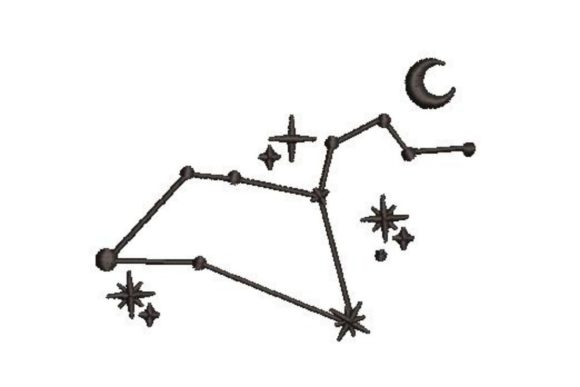
When I opened the Star Constellation embroidery file for the first time, I felt that familiar little lift—the kind you get when a design just *lands*. It’s not flashy or overworked. Instead, it carries a gentle, poetic weight: delicate star placements, subtle connecting lines, and a soft celestial rhythm. This isn’t a cartoonish robot-themed graphic (despite its odd category listing under “Robots”—more on that in a moment). It’s an elegant, modern interpretation of the night sky—romantic without being saccharine, minimalist without feeling cold. For personalized gift products, that balance is gold.
Who Will Love This Design—and Why?
The Star Constellation speaks directly to customers seeking meaning over mass production. Think: new parents naming their baby after a star sign, couples commemorating their wedding date with the actual night sky above them, or a teen receiving their first embroidered tote bag with a constellation matching their birth month. It feels handmade, intentional, and quietly personal—even before a single stitch is sewn.
As a designer sourcing for a small gift shop, I immediately pictured it on:
- Baby embroidery: Tiny, soft blanket corners or onesie hems—especially when paired with neutral thread colors like heather gray or oatmeal.
- Wedding gift: A linen pillow cover for the couple’s guest book table, or a monogrammed kitchen towel with their initials + constellation coordinates.
- Nursery decor: Framed hoop art or stitched onto a custom mobile hanger—its clean lines read beautifully at small scale.
- Everyday handmade products: An embroidered apron for a stargazing baker, a cotton tote for a science teacher, or a travel-sized pillow cover for a college student moving into their first dorm.
Where Star Constellation Shines—and Where to Proceed Thoughtfully
This machine embroidery design is genuinely easy to embroider—as promised—but ease doesn’t mean zero nuance. Here’s where it performs best, and where extra care pays off:
- Best fabric pairings: Medium-weight cotton, linen blends, quilting cotton, and stable knits (with proper stabilizer). It looks especially refined on natural fibers with subtle texture—think washed canvas or organic cotton towel fabric.
- Avoid on: Highly textured terry cloth (the fine lines may blur), stretchy baby bodysuits (stitch tension can distort delicate connections), curved surfaces like mug cozies (unless resized and re-digitized), and ultra-dark fabrics unless using high-contrast thread colors.
- Small details matter: The faintest connecting lines between stars are charming—but they’re also the most vulnerable. On thick towels or loosely woven fabric, those threads may sink or disappear. Always test on scrap fabric that matches your final product’s weight and weave.
Why This Design Builds Trust—and Sales
In my 12 years designing for Etsy sellers and boutique gift shops, I’ve learned this: emotional resonance drives repeat buyers. The Star Constellation invites storytelling. When a customer sees it on your website—a soft-focus photo of the design stitched on a cream-colored pillow cover beside a handwritten note about “your birthday sky”—they don’t just see embroidery. They see memory, intention, and care.
That translates directly to perceived value. A $24 embroidered towel feels like a $38 keepsake when anchored by a meaningful motif like this. It also lifts product photography: the design’s clean silhouette photographs crisply, scales well for thumbnails, and pairs effortlessly with printable mockups for digital listings. For Etsy sellers and small shop owners, that means higher click-through rates and fewer “just browsing” exits.
Practical Embroidery Notes You Can’t Skip
Before stitching your first Star Constellation order, here’s what I always do—and recommend you do too:
- Test on scrap fabric that mirrors your intended product—same weight, same finish, same wash history (pre-washed? ironed?).
- Check thread color contrast carefully. Light gold or pale silver works beautifully on ivory, but vanishes on ecru. Dark navy or charcoal pops on light fabric but needs testing on mid-tones.
- Confirm hoop size compatibility—not just for your machine, but for your product. That delicate constellation won’t fit neatly on a 4x4 hoop if your pillow cover seam allowance is tight.
- Review stitch density. Low-density fills (if any) help prevent stiffness on baby blankets; denser outlines hold shape better on frequently washed towels.
- Use appropriate stabilizer. Tear-away works for stable wovens; cut-away adds durability for items like aprons or totes that’ll face repeated laundering.
- Compare light and dark fabric mockups side-by-side before approving a customer preview. What reads as “ethereal” on white may look muddy on charcoal.
- Inspect small details post-stitch. Zoom in on your finished sample: Are all star points crisp? Do connecting lines remain legible? If not, adjust tension or stabilizer—not the design.
- Verify commercial licensing before selling finished products. Since this is a digital embroidery file, confirm whether it permits resale of physical goods—many do, but never assume.
A Note on That “Robots” Category
Yes—it’s listed under “Robots.” But let’s be clear: Star Constellation has no gears, no circuitry, no metallic sheen. It’s pure celestial embroidery. If you’re curating for a handmade audience, treat it as part of your “meaningful motifs” or “personalized keepsakes” collection—not tech-themed goods. Customers searching for astronomy-inspired gifts won’t find it there, so consider how you tag and describe it in your own shop. Clarity builds trust faster than clever categorization ever will.
Final Thought: More Than Just Stars
The Star Constellation machine embroidery design succeeds because it’s both simple and significant. It doesn’t shout. It whispers something true: that we all look up, wonder, and seek connection. Whether stitched onto a newborn’s first blanket or a retiree’s favorite gardening apron, it transforms a functional item into a quiet heirloom. For embroidery makers, gift shop owners, and Etsy sellers building a brand around heart-led craftsmanship—that’s not just a design. It’s a story waiting to be worn, held, gifted, and kept.