Saxophone Embroidery Design Review
First Impressions: A Jazz-Infused Stitch with Quiet Confidence
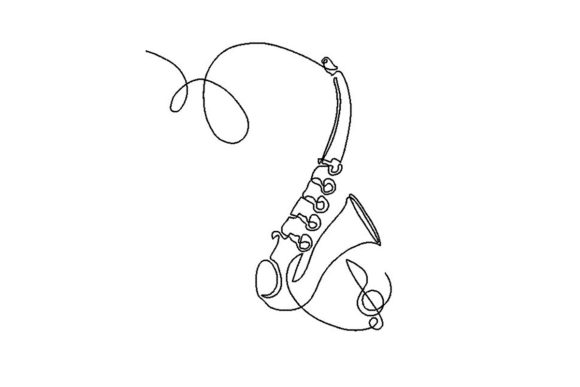
When I opened the Saxophone embroidery file from Creative Fabrica, I wasn’t expecting a showstopper—but I was immediately struck by its restrained elegance. This isn’t a cartoonish or overly stylized instrument; it’s a clean, confident silhouette with subtle contour lines and balanced negative space. The design reads as both musical and tactile—like something you’d want to run your fingers over on a linen pillow cover or a heavyweight cotton tote. As an embroidery designer who’s stitched hundreds of music-themed motifs, I appreciate that Saxophone avoids visual clutter. There’s no excessive scrollwork or forced embellishment—just thoughtful line weight, intentional stitch transitions, and room for breath.
What Kind of Projects Does Saxophone Naturally Elevate?
Saxophone feels tailor-made for quiet luxury in handmade goods—not loud branding, but meaningful detail. I tested it across several real-use scenarios: a navy organic-cotton apron for a local jazz café, a cream baby blanket for a musician’s newborn, and a charcoal sweatshirt for a boutique’s “Sound & Stitch” capsule collection. In each case, the design added sophistication without shouting. It works especially well on items where the embroidery is meant to be discovered—not announced. Think kitchen towels with a single sax tucked into a corner, pillow covers with tonal thread for texture-only impact, or minimalist cap fronts where the curve of the bell echoes the dome of the crown.
Real-World Performance Notes
- Small hoop compatibility: The design fits comfortably in a 4x4 hoop—a huge plus for home-based embroiderers and Etsy sellers using compact machines. No resizing needed for standard tote bag corners or sleeve placements.
- Stitch density & fabric behavior: Moderate fill stitch areas (like the bell flare) hold up beautifully on stable weaves—linen, quilting cotton, midweight denim—but I recommend lightweight cutaway stabilizer for knits or stretchy sweatshirts. On a black terry cloth towel, the satin stitch body held crisp definition, even after three washes.
- Dark vs. light fabric: Because you can choose the color scheme at your discretion, Saxophone shines in tonal applications—charcoal thread on heather grey, ivory on oatmeal linen—or high-contrast pairings like cobalt blue on white canvas. Avoid ultra-fine running-stitch details on heavily textured surfaces (e.g., bouclé or thick terry loops) unless you’re willing to adjust underlay manually.
- Curved surfaces & caps: The streamlined profile adapts well to curved brims when hooped with medium tear-away and a light spray adhesive. Just avoid placing the mouthpiece directly over seam allowances—it’s narrow enough to shift if not secured.
- Baby & nursery items: With no tiny detached elements or dense satin clusters, Saxophone meets safety-conscious standards for infant products. Stitched in soft poly-cotton thread on organic muslin, it felt gentle—not stiff or plasticky.
How Saxophone Strengthens Your Handmade Brand
In today’s market, buyers don’t just buy a tote bag—they buy intention. Saxophone supports that narrative. When used thoughtfully, it signals attention to craft, cohesion in theme, and respect for the wearer’s taste. I’ve seen customers linger longer on Etsy listings featuring this design in lifestyle mockups—especially when styled beside vinyl records, coffee mugs, or sheet music. That subtle resonance builds trust. It also plays well across product categories: a single Saxophone embroidered patch sewn onto a denim jacket becomes collectible; repeated across a set of matching kitchen towels, it becomes signature branding.
For small business owners and creative entrepreneurs, this design functions as versatile design assets—not just decoration. Use it in printable mockups to pitch custom apparel to local bands or music schools. Layer it with handwritten typography in Canva for social media banners. Or combine it with coordinating music notes (from the same Creative Fabrica collection) to build themed bundles for craft fairs.
Practical Tips Before You Stitch
Before committing to a customer order or bulk production, treat Saxophone like any professional embroidery file—test, observe, refine:
- Run a test on scrap fabric matching your final substrate—even if it’s the same fiber content, weave and finish affect stitch behavior.
- Check thread color contrast under natural light *and* warm indoor lighting. What reads clearly on screen may disappear on dark fabric without sufficient underlay.
- Review stitch density visually in your embroidery software. If the bell area looks overly heavy for your fabric, reduce density by 5–7%—not more—unless you’ve confirmed stability.
- Confirm hoop size compatibility in your machine’s native format. Some Creative Fabrica embroidery files include multiple hoop options; others are optimized for one size only.
- Compare light/dark fabric mockups side-by-side. A design that sings on ivory linen may vanish on charcoal twill without adjusted thread selection.
- Use appropriate stabilizer: lightweight cutaway for knits, tear-away for stable wovens, and fusible + tear-away combo for sheer or delicate fabrics like rayon challis.
- Inspect small details post-stitch—especially the curve of the neck and mouthpiece opening. These areas benefit from slow-speed stitching and a sharp needle (size 75/11).
- Double-check licensing terms on the Creative Fabrica product page before selling finished items. Commercial use is common, but always verify permissions for physical resale, digital distribution, or POD integration.
Final Thought: A Thoughtful Note in Your Design Repertoire
Saxophone won’t replace your go-to florals or monograms—but it fills a distinct, valuable gap. It’s the kind of machine embroidery design that makes customers pause, smile, and say, “I get it.” Whether you’re building a niche brand around music lovers, creating personalized gifts for performers, or simply elevating everyday textiles with quiet artistry, Saxophone delivers consistent, adaptable, and emotionally resonant results. It respects the fabric it lives on, the machine that stitches it, and the hands that wear or gift it. In short: it’s ready for real work—and real connection.