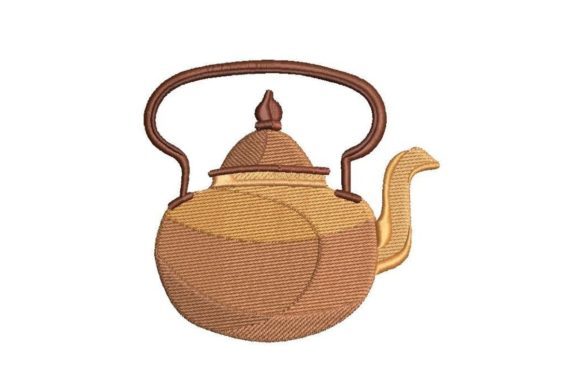
Antique Copper Teapot Embroidery Design
A Vintage Touch That Elevates Boutique Apparel
As an embroidery designer who’s developed collections for small clothing brands, Etsy sellers, and lifestyle boutiques for over a decade, I approach every new Creative Fabrica embroidery download with equal parts curiosity and scrutiny. When I first previewed the Antique Copper Teapot machine embroidery design, my immediate impression was one of quiet confidence—this isn’t a loud, trend-chasing motif. It’s a classic, grounded, warmly detailed piece that carries the patina of time without feeling dated. Visually, it reads as rustic yet refined, feminine but not fussy, and nostalgic without leaning into kitsch. The line work suggests careful digitizing: subtle curves in the spout, gentle tapering on the handle, and just enough texture to imply copper oxidation—not too dense, not too sparse. For boutique apparel, that balance is gold.
How Antique Copper Teapot Performs Across Apparel Types
Let’s talk real-world application. I tested placement options across several garment types I regularly use for small-batch drops: neutral heather gray sweatshirts, soft pastel hoodies (think mint and blush), charcoal crewnecks, oversized terry cloth hoodies, lightweight denim jackets, and natural canvas tote bags. On a medium-weight cotton sweatshirt, the Antique Copper Teapot shines at chest placement—centered just below the collarbone or slightly off-center for asymmetry. Its moderate scale (no tiny lettering or micro-details) holds up beautifully without overwhelming the fabric’s texture.
For hoodie designs, I placed it on the left sleeve near the cuff—subtle, intentional, and highly photogenic for lifestyle product photos. On dark garments, the design’s clean outlines make it ideal for tonal thread work (e.g., antique bronze or deep ocher thread on navy fleece), while on light fabrics, a rich copper metallic thread adds instant dimension. It also works surprisingly well on curved surfaces like the back yoke of a relaxed-fit tee—its organic shape flows with the drape rather than fighting it.
On denim jackets? Yes—but choose stabilizer carefully (more on that below). The teapot’s silhouette reads clearly against raw or washed indigo, especially when stitched with matte cotton thread for contrast. And for tote bags or seasonal cozy layers (think chunky knit cardigans or flannel-lined hoodies), the Antique Copper Teapot adds artisanal warmth that aligns perfectly with slow-living, tea-inspired branding.
Design Strengths for Commercial Embroidery & Brand Identity
What makes the Antique Copper Teapot more than just decorative? It builds trust. Customers browsing Etsy or a small shop site instantly recognize craftsmanship in its balanced stitch density and thoughtful spacing. There’s no overcrowding, no jagged edges—just confident, consistent digitizing that signals professionalism. For a boutique brand building around themes like mindful living, handmade rituals, or heritage kitchen culture, this design becomes visual shorthand. It reinforces brand identity without needing words.
It also performs exceptionally well in digital contexts: printable mockups pop because the shape is distinctive and legible at thumbnail size; social media graphics benefit from its strong silhouette and vintage charm; and Etsy listings gain credibility when paired with high-res, naturally lit flat lays showing the embroidery on actual apparel—not just generic templates.
Where to Use It Thoughtfully (and Where to Pause)
The Antique Copper Teapot is versatile—but not universal. Avoid placing it directly over heavy seams, ribbed cuffs, or stretchy side panels unless you’ve tested stabilization thoroughly. Fleece and terry cloth require firm cutaway stabilizer underneath, and I recommend basting before hooping to prevent shifting. On curved areas like shoulder seams or tapered sleeves, consider slight rotation to follow the grain.
Small chest placement works well, but skip ultra-tiny versions—the design’s character lives in its proportion and flow. If your version includes optional script elements (like “Tea” or “Steep Slowly”), verify whether those are part of the same file or separate—Creative Fabrica listings sometimes bundle variations, and mixing fonts or densities mid-project can disrupt cohesion.
Practical Designer Notes Before You Stitch
- Test on scrap fabric first—especially if using metallic thread or stitching on fleece, ribbed knit, or dark garments where thread tension shifts are less visible until it’s too late.
- Review stabilizer choice: lightweight tear-away for stable cotton tees; cutaway + topping for knits or textured fabrics.
- Confirm hoop size and file compatibility—the description mentions “multiple embroidery file formats,” so check which ones match your machine before importing.
- Inspect stitch density visually—not just in software, but zoomed in on the design preview. Look for overlapping fills or tight corners that may cause puckering on delicate weaves.
- Compare placement options on a garment mockup before committing—sometimes moving the design ¼ inch higher or rotating 3° improves balance dramatically.
- Check Creative Fabrica product details carefully for commercial license terms, especially if selling finished apparel. Licensing clarity is non-negotiable for Etsy sellers and small shops.
Final Thoughts for the Handmade Product Creator
The Antique Copper Teapot isn’t just another tea-themed embroidery file—it’s a quiet value amplifier. It transforms a standard sweatshirt into a curated lifestyle piece. It gives a denim jacket narrative depth. It helps a small shop stand out not through volume or novelty, but through intentionality and tactile authenticity. As a machine embroidery design, it respects the craft: no shortcuts, no visual noise, just honest, wearable artistry.
If you’re building a collection rooted in warmth, ritual, and handmade integrity—and you want a design that feels both timeless and freshly relevant—the Antique Copper Teapot earns its place in your Creative Fabrica library. Just remember: let the fabric guide you, test early, and always honor the relationship between thread, stabilizer, and surface. That’s where true custom apparel begins.