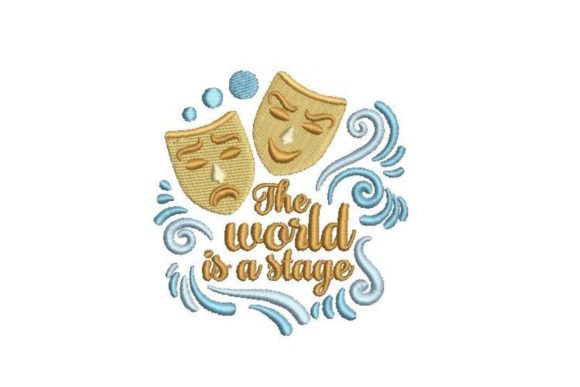
The World is a Stage
A Thoughtful, Timeless Embroidery Design for Craft Fair Sellers
As an embroidery designer who’s prepped over 200 craft fair booths—and shipped thousands of embroidered tote bags, tea towels, and patches—I approach every new design like a buyer walking past my table: Does it stop them? Does it feel intentional? Does it translate from screen to stitch without fuss? The World is a Stage does all three—quietly, confidently, and with surprising versatility.
First Impression: Elegant, Reflective, and Instantly Recognizable
This isn’t a loud or playful quote. It’s not rustic, whimsical, or vintage—it’s elegant minimalism with literary weight. The phrase carries gravitas without pretension, making it ideal for customers who appreciate depth in handmade goods. At a glance, it reads as premium—not because it’s ornate, but because it’s precise, balanced, and emotionally resonant. That matters when shoppers are scanning your booth in under three seconds.
Where It Shines on Craft Fair Products
Tote bag design: A standout on natural canvas or oat linen. Centered above the handle seam or subtly placed near the bottom corner, The World is a Stage elevates a simple market bag into a conversation piece—especially for educators, theater lovers, and creative professionals.
Apron embroidery: Perfect for the chest pocket or lower front panel. Its measured rhythm complements aprons used in bakeries, studios, or coffee shops—adding quiet sophistication without competing with flour-dusted charm.
Tea towel embroidery: Works beautifully on cotton or linen towels with clean lines. Because the phrase is legible at medium scale (4–5 inches wide), it avoids the “squint factor” common with dense inspirational quotes on textured fabric.
Embroidered patch: Highly effective as a sew-on or iron-on accent. When stitched onto denim jackets, backpacks, or tote straps, it signals intentionality—like a signature detail rather than generic decor.
Pillow covers & fabric pouches: Delivers strong visual payoff on solid-color backgrounds. On navy, charcoal, or deep olive, the contrast feels intentional and gallery-ready—ideal for boutique makers building cohesive home collections.
Caps & curved surfaces: Use caution here. The even letter spacing and moderate height mean it *can* work on structured caps—but only if digitized with gentle curve compensation and tested on scrap. Avoid tight-fit beanies or low-profile fronts unless you’ve verified readability post-stitch.
What Makes It Sell Well—Online and In-Person
The World is a Stage performs exceptionally well as a printable mockup for Etsy sellers: it photographs cleanly on neutral backdrops, scales elegantly across product thumbnails, and reads instantly in mobile feeds. Unlike overly decorative or cursive designs, it doesn’t blur or pixelate at smaller sizes—making it reliable for digital listings and social ads.
It also supports batch production. As a machine embroidery design, its clean outlines and consistent stroke width mean fewer thread breaks, less rehooping, and predictable stabilizer use. There are no micro-details or overlapping letters that demand ultra-fine needles or specialty threads—so it’s forgiving across skill levels and equipment types.
Careful-Use Notes Every Designer Should Check
- Stitch density: While not excessively dense, confirm spacing between letters—tight kerning can trap lint or distort on thick fabrics like duck cloth or quilted pouch linings.
- Fabric texture: Avoid highly napped or terry-textured tea towels unless you’re using cutaway + tear-away combo stabilizer. The quote’s clarity depends on surface stability.
- Small sizes: Below 3 inches wide, some letterforms may lose distinction—especially on dark fabric. Always test at your smallest intended size before cutting production runs.
- Thread colors: High-contrast pairings (ivory thread on charcoal, navy on cream) maximize legibility. Avoid tone-on-tone combos unless aiming for subtle luxury—then verify visibility in person, not just on screen.
How It Strengthens Your Booth & Brand
In a sea of floral motifs and punny phrases, The World is a Stage stands out by being both familiar and fresh. It invites pause—not laughter, not nostalgia, but quiet recognition. That makes it powerful for booth storytelling: pair it with a small framed quote card beside your embroidered samples, and watch how often buyers pause, read aloud, and ask, “Is that Shakespeare?”
It also reinforces handmade quality. Because the phrase resists trendiness, it doesn’t date quickly—meaning your inventory stays relevant across seasons. For small shop owners building long-term brand consistency, that’s gold. It fits seamlessly into collections themed around creativity, reflection, or mindful living—without needing explanation or translation.
Practical Embroidery Designer Notes Before You Stitch
- Test the embroidery file on scrap fabric matching your final product’s weight and weave.
- Check thread contrast under natural light—not just studio bulbs—to avoid surprises in booth lighting.
- Review spacing and letter proportions in your embroidery software; adjust tracking if needed for tighter hoops.
- Confirm hoop size compatibility—especially if stitching on curved or narrow items like cap brims or pouch flaps.
- Inspect stitch density visually: look for areas where satin stitches might puddle or fill stitches might overwhelm delicate lettering.
- Choose stabilizer based on fabric: lightweight cutaway for stable wovens, fusible + tear-away for knits or stretchy apron fabrics.
- Create at least one real-world finished product—not just a hoop sample—before listing or packing for market day.
- Compare how it reads on multiple fabric colors: what works on oat linen may vanish on heather gray.
- Verify commercial licensing terms before selling embroidered items—this is essential for Etsy sellers and wholesale partners alike.
Bottom line? The World is a Stage isn’t just another inspirational quote turned into a machine embroidery design. It’s a quietly strategic asset—for your craft fair table, your Etsy shop, and your growing reputation as a maker who chooses meaning, not just motif. When stitched with care, it transforms everyday objects into keepsakes. And in handmade markets, that’s how loyalty begins.