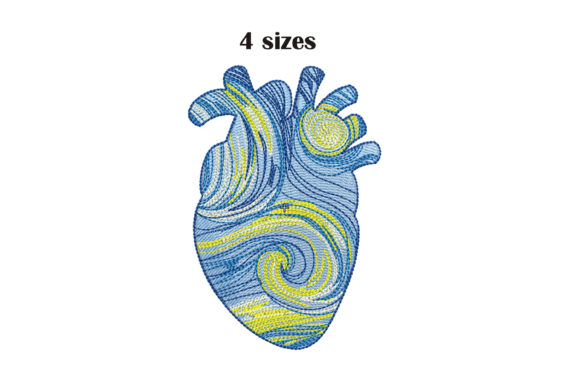
Heart in the Starry Night
A Thoughtful Embroidery Designer’s Review for Small Business Use
As an embroidery designer who’s helped over 200 small businesses launch cohesive, production-ready branded merchandise, I approached Heart in the Starry Night with both curiosity and practical scrutiny. The title evokes warmth, creativity, and quiet confidence—less “trendy graphic” and more “intentional symbol.” That matters. When you’re stitching for a local florist, indie bakery, or handmade studio, your design must reflect authenticity while holding up across dozens of real-world applications: embroidered patches, apron corners, cap fronts, tote bag accents, staff uniforms, and even product packaging tags.
First Impression: Friendly, Artistic, and Professionally Approachable
Heart in the Starry Night reads as inspirational—not saccharine, not overly literal, but emotionally grounded. It avoids cliché while still feeling instantly legible. That balance is rare. For small business merch, this means it can serve dual roles: a subtle brand signature (think chest logo on a linen apron) *and* a meaningful visual anchor (like a stitched patch on a reusable tote for customer thank-you gifts). Its artistic tone aligns well with creative studios, boutiques, wellness brands, and pet businesses that value soulful presentation without sacrificing polish.
Where It Shines in Real Business Applications
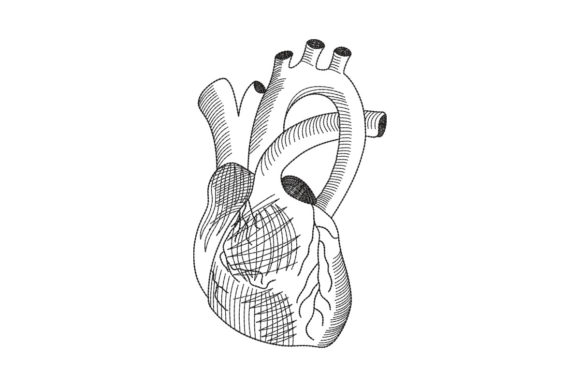
- Embroidered patches: The heart-and-stars motif scales beautifully from 2" to 3.5". At standard patch sizes, it reads clearly without oversimplification—ideal for sew-on or iron-on branding on jackets, backpacks, or shop signage.
- Apron embroidery: Positioned on the left chest or lower corner, Heart in the Starry Night adds artisanal charm without overwhelming functional fabric. Its balanced negative space prevents bulkiness—a key win for food-service or craft-business staff wear.
- Cap embroidery: Works cleanly on structured front panels when digitized with moderate stitch density. Avoid placing it too low on curved bill surfaces unless tested first—the star details need breathing room.
- Tote bag design: Perfect for center-front placement on natural canvas or cotton duck. Its composition holds visual weight without requiring excessive thread coverage, keeping production cost and turnaround efficient.
- Custom apparel & product labels: As a sleeve detail on crewnecks or a minimalist tag on handmade soap packaging, it signals care and craftsmanship—reinforcing brand identity without shouting.
Use With Intention: Key Considerations Before Production
While Heart in the Starry Night is versatile, its artistic nuance demands thoughtful execution. Here’s where attention pays off:
- Small patch sizes (under 1.75"): Test the design at actual scale. Stars and fine heart outlines may lose definition if digitized too tightly—confirm clarity before bulk patch runs.
- Curved surfaces (caps, sleeves, mugs): Always hoop and test on the exact fabric + curvature you’ll use. What reads cleanly on flat cotton may distort on twill or stretch blends.
- Dark uniforms or textured fabric: Review thread color contrast carefully. A soft ecru heart against navy twill might recede; deep charcoal stars on black denim could disappear without metallic or high-sheen threads.
- Frequent washing or high-friction use: Check stitch density. Overly dense fills increase wear risk on aprons or work shirts—opt for optimized underlay and strategic satin/running stitch balance.
How It Strengthens Brand Identity and Customer Trust
In a crowded marketplace, consistency *and* character drive recognition. Heart in the Starry Night doesn’t scream “look at me”—it invites pause. That subtlety builds trust: customers associate it with intentionality, not mass production. When used across multiple touchpoints (a barista’s apron, a bakery’s tote, a floral shop’s gift tag), it creates visual rhythm without repetition fatigue. It also supports handmade positioning—its organic flow feels human-made, not algorithmically generated—making it ideal for Etsy sellers, craft fairs, and boutique collaborations.
Importantly, it avoids limiting brand perception. Unlike ultra-minimalist or hyper-trendy motifs, Heart in the Starry Night adapts across seasons and audiences. A pet brand can lean into its warmth; a creative studio can highlight its artistry; a wellness business can emphasize its calm resonance—all without redesigning the core asset.
Practical Embroidery Designer Notes for Commercial Use
Before launching Heart in the Starry Night into production, here’s what I always do—and recommend you do too:
- Run a black-and-white test stitch-out first. This reveals spacing issues, jump stitches, and density imbalances invisible on screen.
- Verify performance at your smallest intended size—especially for cap fronts or pocket logos.
- Review thread color pairings against your base fabrics. Contrast isn’t just about visibility—it’s about perceived quality.
- Inspect spacing between stars and heart edges. Tight gaps can cause thread nesting or skipped stitches on lightweight materials.
- Confirm hoop size compatibility with your machines—and whether the design fits within standard commercial hoops without re-hooping mid-stitch.
- Always test on the *exact* fabric and stabilizer combo you’ll use. Linen behaves differently than cotton poplin; fleece changes tension dynamics entirely.
- Create a printable mockup for client approval—show it on a realistic garment or patch layout, not just a white background.
- Compare Heart in the Starry Night alongside your other design assets. Does it harmonize with your logo? Support your typography? Extend your color palette?
- Double-check commercial licensing terms. Since this is marketed as a machine embroidery design for merchandise, confirm it permits resale of finished products—this is non-negotiable for small business merch and Etsy sellers.
Ultimately, Heart in the Starry Night isn’t just another digital embroidery file. It’s a flexible, emotionally intelligent tool—one that elevates everyday items into brand moments. Used thoughtfully, it strengthens connection, communicates care, and quietly reinforces why customers choose *you*. Whether you're embroidering for a neighborhood café or building a full line of handmade product, this design earns its place in your embroidery library—not because it’s flashy, but because it works, consistently, beautifully, and authentically.