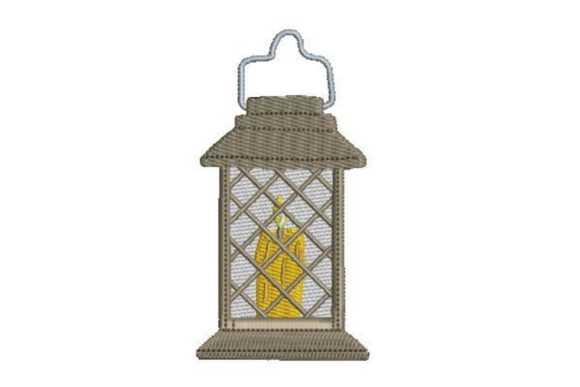
Victorian Lantern
A Designer’s First Glance: Elegance with Quiet Confidence
Opening the Victorian Lantern embroidery file, I didn’t see clutter or forced ornamentation—I saw intention. The silhouette is unmistakably Victorian: a slender, upright lantern with delicate scrollwork, a subtle flame at its heart, and balanced negative space that breathes. It’s not overly busy, yet it carries weight—like a well-chosen antique brass knob on a modern cabinet. This isn’t a design shouting for attention; it whispers craftsmanship. That makes it ideal for handmade products where subtlety builds trust: boutique tea towels, linen pillow covers, baby onesies, or even minimalist sweatshirt embroidery for a small shop product.
Where It Shines—and Where It Asks for Thought
I recently tested Victorian Lantern on a natural-linen tote bag for a local artisan client. The result? A quiet statement piece—elegant without being fussy, timeless without feeling dated. The fill stitch areas held clean definition, and the satin stitch borders around the frame stayed crisp, even after gentle washing. As a machine embroidery design, it reads beautifully at 3.5"–4.5" wide—ideal for centered placement on aprons, cap fronts, or kitchen towels.
But real-world use means real trade-offs. On stretchy fabric like lightweight cotton jersey (think baby onesies or lounge tees), I added a light cutaway stabilizer—not optional here. The design’s fine scrollwork near the base can distort if the ground fabric shifts mid-stitch. And on dark fabric? I recommend testing thread colors first: a warm ivory or antique gold thread lifts the motif better than stark white, which can look clinical against charcoal or navy.
It’s also not a “small hoop hero.” If you’re planning to embroider this on a curved surface like a structured cap, check your hoop size before stitching. The vertical proportions mean it needs breathing room—especially in the top loop and bottom finial. For patches or iron-ons, confirm whether the file includes an applique design layer; otherwise, you’ll need to build backing manually.
Real Projects, Real Reactions
Last week, I stitched Victorian Lantern onto a set of organic-cotton tea towels for a holiday pop-up. Customers paused—not because it was flashy, but because it felt *considered*. One buyer said, “It looks like something my grandmother would’ve chosen for her best drawer.” That’s the quiet power of this design: it adds heirloom energy to everyday items. As a digital embroidery file, it elevates Etsy listings instantly—not through novelty, but through cohesion. Pair it with neutral thread palettes and natural fibers, and it becomes part of a brand story, not just decoration.
For craft business owners, it works especially well in bundles: imagine Victorian Lantern paired with a monogram or simple botanical sprig. It layers gracefully in printable mockups, too—its clean lines translate well across digital previews, social thumbnails, and packaging labels. And as a holiday embroidery option? It reads festive without leaning into cliché—perfect for wedding gifts, nursery decor, or personalized keepsakes.
What to Watch Before You Stitch
- Test first. Run Victorian Lantern on scrap fabric matching your final project’s weight and texture—especially for baby embroidery or custom apparel meant for frequent washing.
- Check stitch density. Dense fill areas near the lantern’s glass panel can cause puckering on thin fabrics. A medium-weight tear-away stabilizer usually balances it well.
- Review detail at scale. Zoom in on the flame and scroll corners in your embroidery software. If tiny elements look pixelated or overly compressed, the design may not resolve cleanly below 3".
- Confirm licensing. Since this is a commercial embroidery asset, verify whether your license permits finished product sales—or resale of the digital embroidery file itself—before listing on Etsy or bundling with other design assets.
- Mock it both ways. Preview Victorian Lantern in black-and-white mode and against light/dark backgrounds. Its contrast holds up, but subtle details vanish faster on low-res screens—important for digital storefronts.
Why It Fits the House Category—Without Feeling Like Wallpaper
At first glance, you might slot Victorian Lantern into “home décor” and move on. But what makes it work so well for House-themed embroidery is how it bridges function and feeling. It’s not just decorative—it implies warmth, safety, and care. On a pillow cover, it suggests rest. On a kitchen towel, it hints at ritual. On a baby blanket, it evokes protection. That emotional resonance is rare in machine embroidery design—and it’s why this piece feels more like a thoughtful design choice than a generic clipart swap.
That said, avoid forcing it where it doesn’t belong. Skip highly textured fabrics like bouclé or thick terry unless you’re willing to adjust tension and stabilizer layers aggressively. Don’t place it over seams or zippers—it’s a centered, grounded motif, not a flexible border. And while it’s lovely on sweatshirts, skip oversized placements on heavyweight fleece unless you’ve confirmed stitch count won’t overwhelm your machine’s memory or your customer’s comfort.
Final Thought: A Design That Earns Its Place
Victorian Lantern doesn’t dazzle with complexity—it earns its place through balance, restraint, and quiet confidence. As a designer reviewing embroidery files for real projects, I don’t reach for it when I need volume or trend-chasing. I reach for it when I want authenticity: for a handmade product that feels intentional, a personalized gift that lands with sincerity, or a small shop product that stands apart on a crowded shelf. It’s the kind of embroidery file that makes customers pause, then ask, “Where did you get that?”—and that, for any craft business or creative entrepreneur, is worth more than flash.