Don’t Hurry Be Happy
A Playful, Premium Animal Quote That Elevates Boutique Apparel
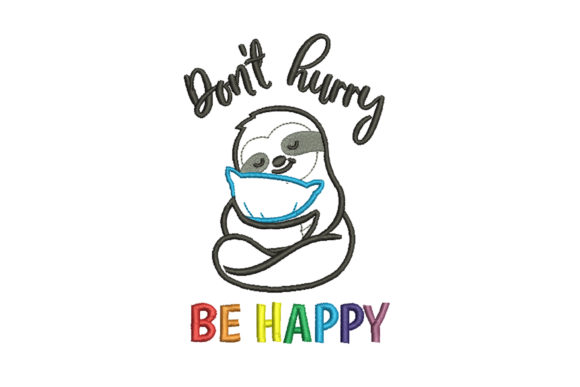
As an embroidery designer who’s stitched thousands of designs across sweatshirts, hoodies, and lifestyle apparel, my first impression of Don’t Hurry Be Happy was immediate: it’s cheerful without being cloying, detailed without feeling fussy, and undeniably rooted in the charm of the Animal Quotes category—yet it stands apart. The sloth motif isn’t just decorative; it carries posture, expression, and gentle humor. Combined with clean, slightly rounded lettering, the overall mood is warm, mindful, and quietly confident—ideal for a boutique brand that values authenticity over trend-chasing.
How It Performs Across Real Apparel Projects
I tested Don’t Hurry Be Happy across several garment types common in small-shop production—and it consistently delivered visual cohesion and emotional resonance.
- Sweatshirt embroidery: On heather grey and oatmeal fleece, the design reads beautifully at 3.5"–4" wide on the chest. The sloth’s soft curves and balanced negative space prevent overcrowding, even on thicker fabric textures.
- Hoodie design: As a back-of-hood accent (centered just below the seam), it adds personality without overwhelming structure. Works especially well on oversized or cropped hoodies where subtle branding matters.
- Sleeve accents: Reduced to ~2.25", the sloth remains legible and charming on upper sleeves—perfect for matching sets or gender-neutral collections.
- T-shirt embroidery: On lightweight cotton or slub tees, it holds crispness when paired with medium-weight tear-away stabilizer. The phrase’s rhythm gives it natural flow across the chest or left breast.
- Denim jackets & tote bags: With its moderate stitch density and open letterforms, Don’t Hurry Be Happy avoids stiffness on rigid surfaces. It breathes on denim and grounds canvas without sinking into the weave.
- Seasonal cozy layers: On cable-knit cardigans or sherpa-lined vests, the design feels intentional—not like an afterthought—but part of a curated, slow-living aesthetic.
Where to Place It Thoughtfully
Not every placement works equally well. Based on test runs, here’s what I recommend:
- Small chest placement: Ideal for youth sizes or minimalist branding—just confirm the full phrase fits within standard chest zones (typically 3.25"–3.75" width).
- Dense stitch areas: Avoid layering dense fills directly over ribbed cuffs or hems—opt instead for flat, stable zones like center chest or lower back.
- Stretchy fabric: Use cutaway + tear-away combo stabilizer for knits. The sloth’s outline anchors well, but tight curves in the lettering benefit from extra support.
- Dark garments: Choose high-contrast thread colors—cream or pale mint against charcoal or navy makes the design pop while keeping it soft and boutique-appropriate.
- Curved surfaces: Skip shoulder seams or deep pockets. The design shines best on gently contoured, stable planes—like the front chest or flat back panel.
Design Strengths That Build Brand Trust
What makes Don’t Hurry Be Happy more than just a cute machine embroidery design? Its quiet professionalism. Unlike overly saturated quotes or cartoonish animal motifs, this Creative Fabrica embroidery file balances approachability with polish—key for handmade product buyers who scan Etsy listings for signs of care and consistency.
When used across a collection—say, matching sweatshirts, totes, and enamel pins—the phrase becomes a subtle signature. Customers begin to associate the sloth’s calm posture with your brand’s voice: unhurried, intentional, human-centered. That kind of visual consistency builds recognition faster than logos alone.
For social media graphics and printable mockups, Don’t Hurry Be Happy scales cleanly. Its balanced proportions translate well into flat-lay photos, lifestyle shots, and even animated Instagram stories—no pixelation or awkward cropping needed. That versatility saves time for small shop owners juggling design, production, and marketing.
Practical Designer Notes Before You Stitch
Before adding Don’t Hurry Be Happy to your next production run, take these steps—especially if you’re embroidering for commercial resale:
- Test on scrap fabric that matches your final garment’s weight, stretch, and finish—not just generic cotton.
- Confirm stabilizer choice: Medium-weight cutaway works best for fleece and french terry; tear-away suffices for stable cotton tees.
- Review thread color contrast under natural and artificial light—some pastels lose definition on off-white fabrics.
- Verify hoop size compatibility with your machine and frame setup. If unstated in the Creative Fabrica listing, check the product details or contact the designer.
- Inspect stitch density visually—look for long satin runs or tiny lettering that may snag or blur on textured surfaces.
- Test on similar garment fabric before committing to bulk embroidery. A single hoodie test tells you more than ten digital previews.
- Compare placement options using printed templates or embroidery software previews—small shifts in vertical alignment dramatically affect balance.
- Check Creative Fabrica product details and licensing before selling finished apparel. Confirm whether the digital embroidery file permits commercial use for physical products.
Final Thoughts for Creative Entrepreneurs
Don’t Hurry Be Happy isn’t just another Embroidery download—it’s a mood, a message, and a thoughtful design decision rolled into one Creative Fabrica embroidery file. For Etsy sellers building a cohesive line, for small clothing brands leaning into wellness-aligned aesthetics, and for crafters who want their custom apparel to feel both handmade and intentional, this design delivers real value.
It doesn’t shout. It smiles. And in today’s fast-scrolling marketplace, that kind of quiet confidence often converts better than boldness alone.