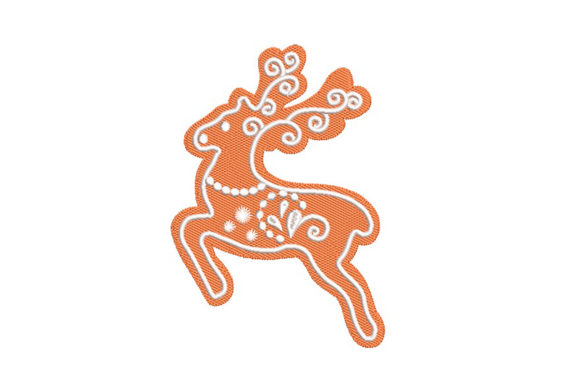
Deer Gingerbread with Pattern
A Designer’s First Look: Whimsy That Stitches Well
When I opened Deer Gingerbread with Pattern, I didn’t just see a holiday motif—I saw a potential signature piece for small-batch makers. It’s got that rare balance: playful enough for baby onesies and cozy enough for kitchen towels, but detailed enough to hold up on boutique sweatshirts or embroidered patches. The deer’s gentle curve, the gingerbread’s subtle texture cues, and the clean silhouette make it feel handmade—not digitized into stiffness. This isn’t just “Christmas embroidery”; it’s a story-shaped design that invites warmth without leaning into cliché.
Real Project Test: A Custom Holiday Tote Bag
Last week, I stitched Deer Gingerbread with Pattern onto a natural linen-cotton tote for a local gift shop launch. I chose matte ecru thread on oat-colored fabric—no contrast overload, just quiet charm. What stood out? The antlers and candy buttons stayed crisp at 4.2” wide, even with moderate stitch density. No thread nesting in corners, no fill-stitch bleed into the gingerbread outline. It read clearly from three feet away—critical when your tote hangs beside ten others at a craft fair. Customers paused. Smiled. Asked, “Is that a deer *and* gingerbread? How clever.” That’s the kind of engagement every Etsy seller wants—not just “cute,” but *memorable*.
Where It Shines (and Where It Asks for Care)
Deer Gingerbread with Pattern excels in medium-scale applications: sweatshirt chest logos, pillow covers, tea towel hems, and baby blanket corners. Its proportions flatter curved surfaces like caps and apron pockets—no distortion if hooped correctly. On stable fabrics (quilting cotton, midweight denim, twill), satin-stitch edges stay smooth, and running-stitch details (like the gingerbread’s icing lines) pop without snagging.
But here’s where attention matters:
- Small hoop sizes: Avoid cramming it below 3.5” wide—the candy dots and eye detail soften. Test first on scrap.
- Stretchy or thin fabric: Use cutaway stabilizer, not tear-away. The design’s gentle curves can ripple on knits without proper support.
- Dark fabric: Light thread colors (ivory, pale mint, soft gold) lift beautifully—but avoid pastel pinks or yellows unless you’ve tested contrast. A black-and-white mockup saves time.
- Dense stitch areas: The gingerbread body uses thoughtful fill-stitch gradation—not solid blocks—so it breathes on apparel. Still, skip ultra-heavy threads on baby items; stick with 40-weight polyester for durability and softness.
Design Integrity in Commercial & Handmade Contexts
As a designer who licenses embroidery files and consults for small shops, I judge Deer Gingerbread with Pattern by how it supports *trust*. When customers see this on a personalized gift—say, an embroidered onesie with baby’s name beneath—it feels intentional, not mass-produced. The shape is distinctive enough to become part of a brand’s visual language (think: a recurring motif across holiday collections), yet flexible enough to pair with other designs—like tiny holly sprigs or minimalist snowflakes—without clashing.
For Etsy sellers, it’s a smart digital embroidery file to bundle: offer three curated thread palettes (rustic neutrals, vintage candy, winter jewel tones) alongside printable mockups. Buyers don’t just want a file—they want confidence in the finished product. Deer Gingerbread with Pattern delivers that because its layout respects negative space. It doesn’t shout; it invites closer looking. That subtlety elevates perceived value, especially on premium items like linen pillow covers or organic cotton tees.
Practical Notes Every Embroiderer Should Check
Before stitching your first client piece—or listing it as a craft business asset—do these six things:
- Test on scrap fabric matching your final material. Linen behaves differently than terry cloth; don’t assume.
- Review stitch density in your embroidery software. If it’s over 12,000 stitches, consider simplifying minor details for baby wear or high-wash items.
- Confirm hoop size compatibility. Does it fit your most-used hoop without re-hooping? If not, plan for positioning time.
- Inspect small details at actual stitch size: Are the candy buttons legible? Does the deer’s eye read as a shape, not a blob?
- Check licensing. If selling finished products (like embroidered patches or tote bags), verify whether the machine embroidery design permits commercial use. If reselling the digital embroidery file itself, ensure redistribution rights are granted.
- Use proper stabilizer. This design leans into texture—so mismatched stabilizer will mute its personality. Cutaway for knits, medium-weight tear-away for stable wovens.
Final Thought: A Design That Grows With Your Craft
Deer Gingerbread with Pattern isn’t just for December. Stitch it in sage and cream for spring nursery decor. Swap reds for terracotta and olive for fall kitchen gifts. Its structure holds up across seasons because it’s rooted in form—not trend. For the maker who values clarity over clutter, warmth over whimsy-for-whimsy’s-sake, and craftsmanship over speed, this is more than a holiday embroidery file. It’s a reliable, expressive tool—one that makes your handmade product feel both personal and polished.